Food Guide · Festival Edition
7 Foods You Must Try at the Festival. And 3 Traps That Will Ruin Your Meal
You have limited time and a serious appetite. Here is the honest guide ...
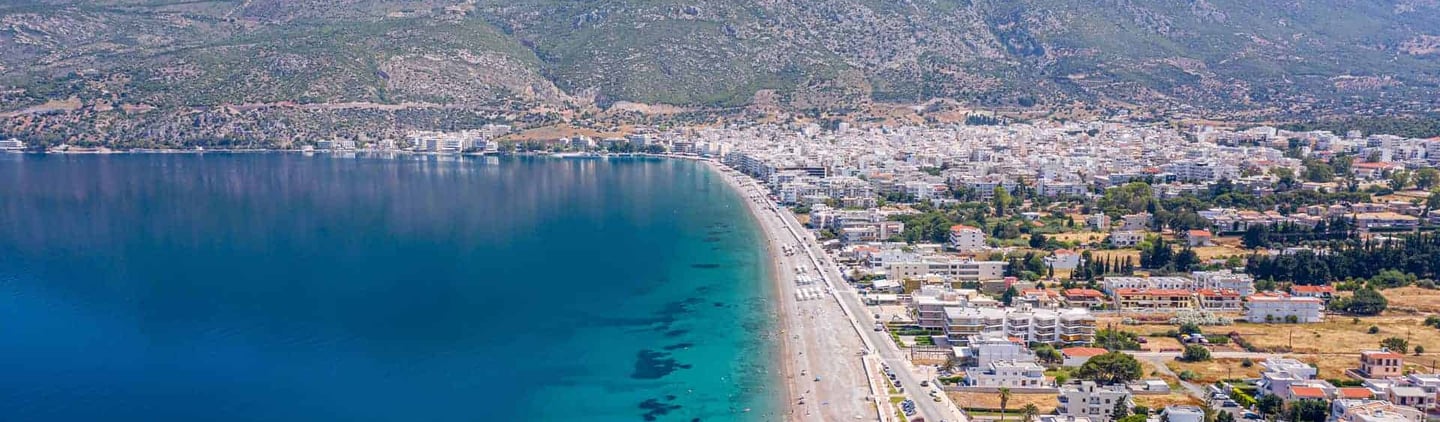
Every food festival has the same problem: too much to taste, not enough time, and no honest guide to what actually matters. Here is what I would tell a friend arriving with one afternoon and a genuine appetite .
The 7 things to find first
01 · The one thing that exists only here
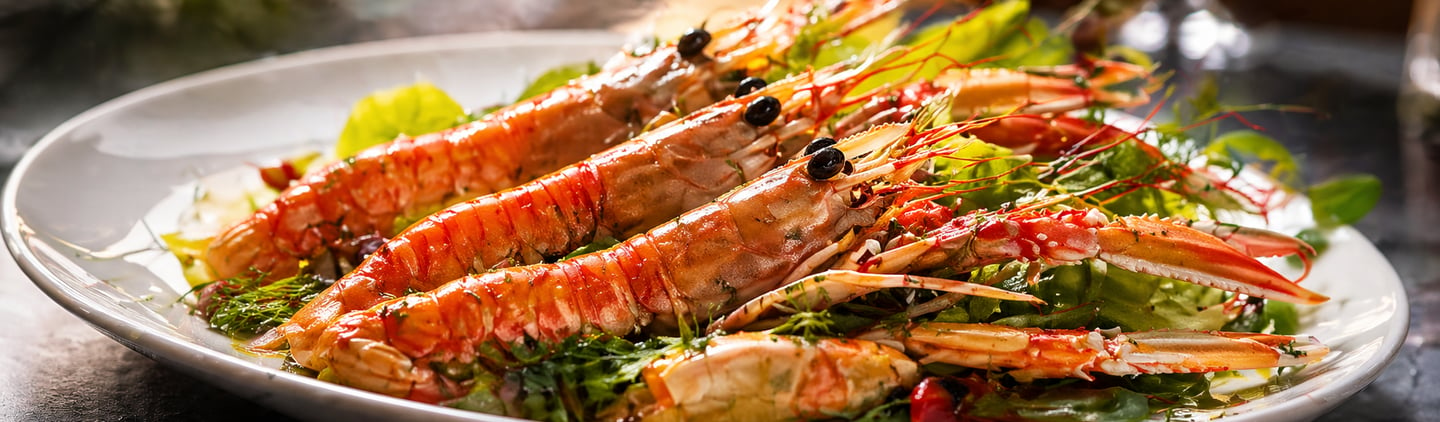
Karavides — Corinthian Gulf Crayfish
I need you to understand something before you order these: the crayfish that live in the Corinthian Gulf are not the same creature as crayfish from the Aegean or the Ionian. The specific mineral content of these waters — the depth, the temperature, the particular character of this enclosed sea — produces a flavour that is sweeter, more complex, more intensely alive than anything I have found anywhere else in Greece.
Serious chefs travel to source them. You are standing next to the water they came from.
Order them grilled — stin schara — with olive oil and lemon. Before you commit, ask one question: "Freska einai?" Are they fresh? A good taverna answers without hesitation, often with pride. If they pause — even for a breath — order the sardines instead. Fresh sardines grilled over charcoal with bread and lemon is one of the finest simple meals on earth. Here it costs almost nothing.
Either way, you cannot go wrong. But do not leave without the crayfish.
02 · The thing nobody expects
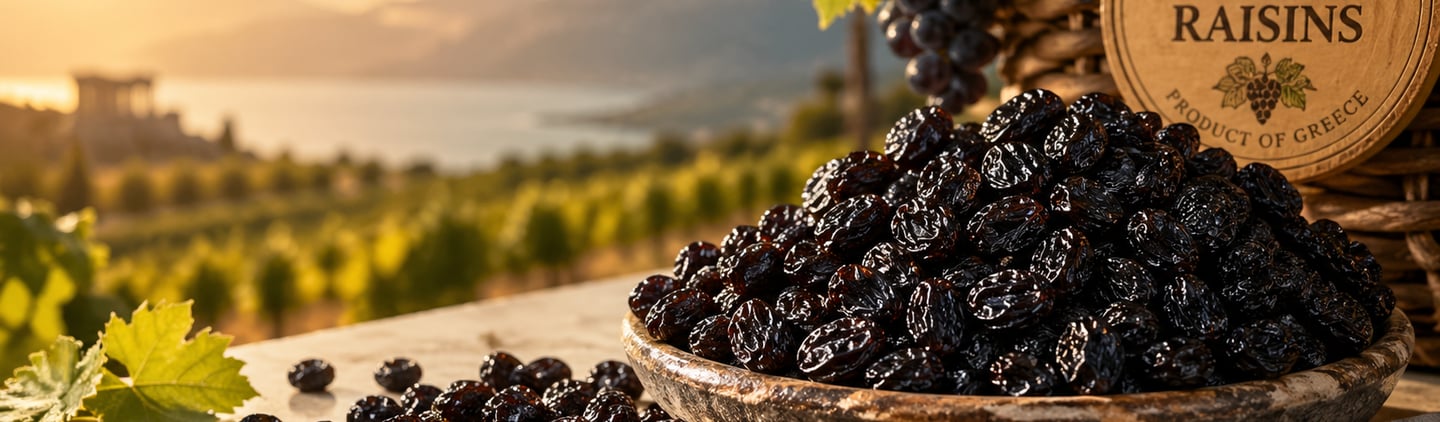
Corinthian Black Raisins — Stafida Mavri
The word "currant" comes from "Corinth." You have been eating a distant imitation of this your whole life.
The shade-dried Corinthian raisin — look for "dried under shade" on the label, it matters enormously — is small, intensely dark, and carries a sweetness with depth underneath it. Like dried cherry. Like something concentrated by time and sun and a very specific piece of earth. It bears no relationship to the dried fruit in a supermarket bag.
Buy a small bag and eat them walking. Don't save them. Don't package them as a thought. Just eat them in the street in the afternoon sun and let them be what they are.
03 · The image of Greek summer
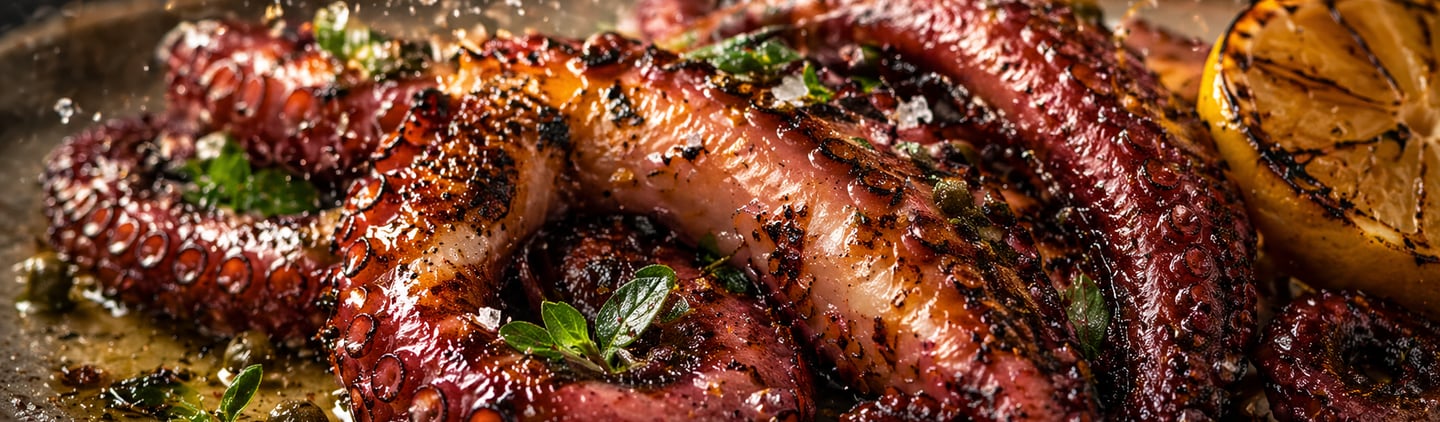
Htapodi — Grilled Octopus
You have seen the photographs. Octopus hanging in the sun outside a Greek taverna, drying on a line like laundry, turning from deep purple to a paler, tougher version of itself. That image exists because it is not a decoration. It is the preparation.
The octopus is hung in the sun to dry for hours before it ever touches a grill. This is what gives it the texture — firm on the outside, tender inside — and the particular smoky sweetness that you cannot get any other way. Shortcuts produce rubbery disappointment. The real thing, done properly, is one of the most satisfying things you will eat in Greece.
At the Taste of Loutraki, order it two ways if you can. Htapodi xidato — octopus in red wine vinegar — as part of your meze: cool, slightly sharp, eaten slowly with bread and tsipouro before the main event arrives. Then htapodi stin schara — grilled over charcoal — as the main event itself.
The vinegar version tells you what the octopus is. The grilled version tells you what this region does with it.
If you see it on a grill outside as you walk past a taverna — still sizzling, just pulled from the charcoal — sit down immediately. Do not look at the menu first. The menu is irrelevant. You already know what you're ordering.

04 · The one to drink
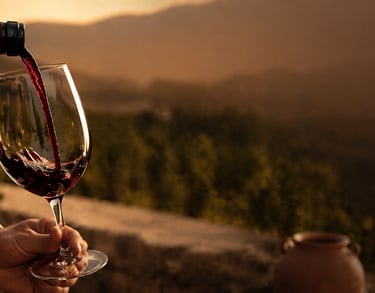
Nemea Agiorgitiko — Corinthia's wine
The Agiorgitiko grape grows in Nemea, forty-five minutes inland from Loutraki, and produces wines that wine journalists have been writing about carefully for years — fortunately without them becoming famous enough to be ruined by the attention.
At the festival, Barafakas Winery is participating. The free wine pairing sessions are worth attending — a qualified sommelier, local food, the specific pleasure of understanding why a wine tastes the way it tastes.
Even if you skip the sessions: order a glass with your karavides. The pairing is not accidental. It is exactly right.
05 · The breakfast you didn't plan
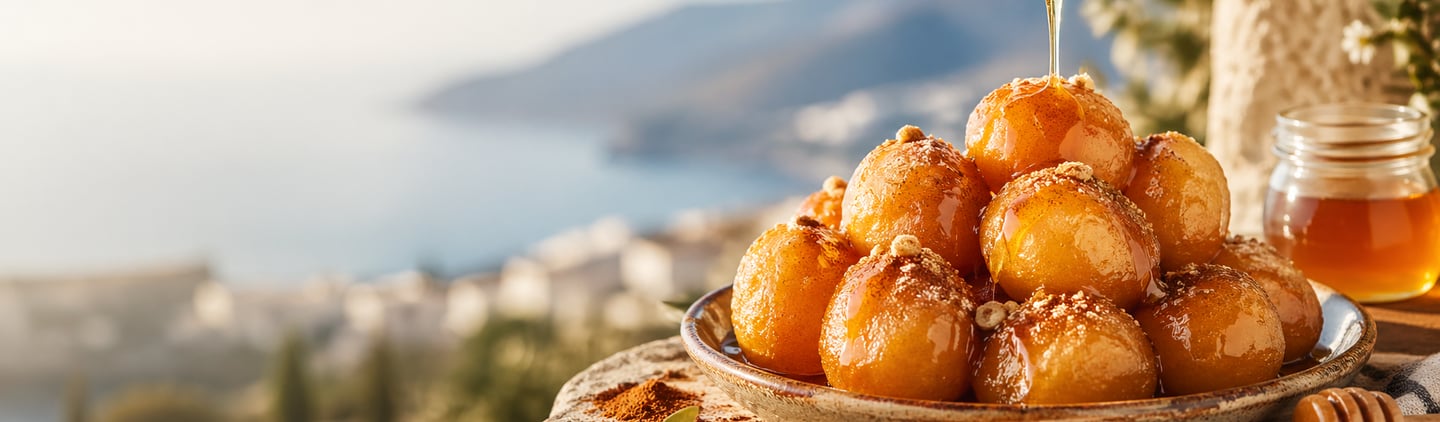
Loukoumades with Gerania Mountain Honey
Fried dough balls with honey — a dessert that has been made in Greece since the original Olympic Games, where athletes received them as prizes. This fact should tell you something about their power.
At the festival, look for stalls using Gerania mountain honey specifically: dark, complex, floral in a way that comes from hives on hillsides above the town. Eat them standing up, immediately, while still hot. They are not the same once they cool.
This is non-negotiable. I will not negotiate on this.
06 · The thing that explains everything
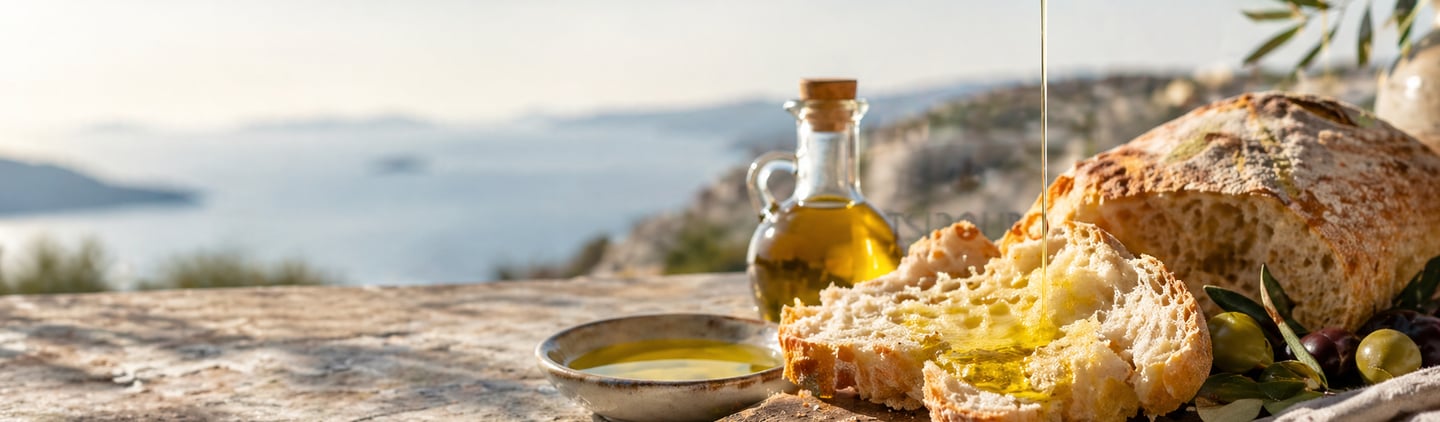
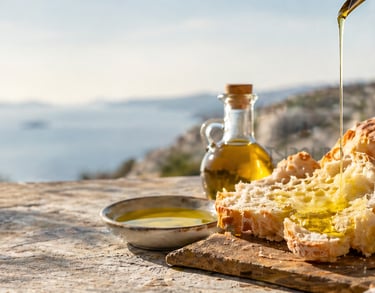
Gerania Olive Oil on Fresh Bread
Greece produces more olive oil per capita than any country on earth. Most of it is exported in bulk and bottled under Italian or Spanish labels at a significant markup. This is one of the quiet injustices of the global food industry.
At the festival you are close enough to the source to taste what it actually is.
Markellos Olive — four generations, same family, same mountain — will be pouring tastings. Ask for the agourelaio: the early harvest oil, pressed from green olives, with the most complex flavour. Taste it on fresh bread.
When it stops you mid-conversation — and it will — you will understand exactly why this region earned its Culinary Capital designation. Not because someone decided to give it a title. Because the oil tastes like this.
07 · The ritual you should not skip
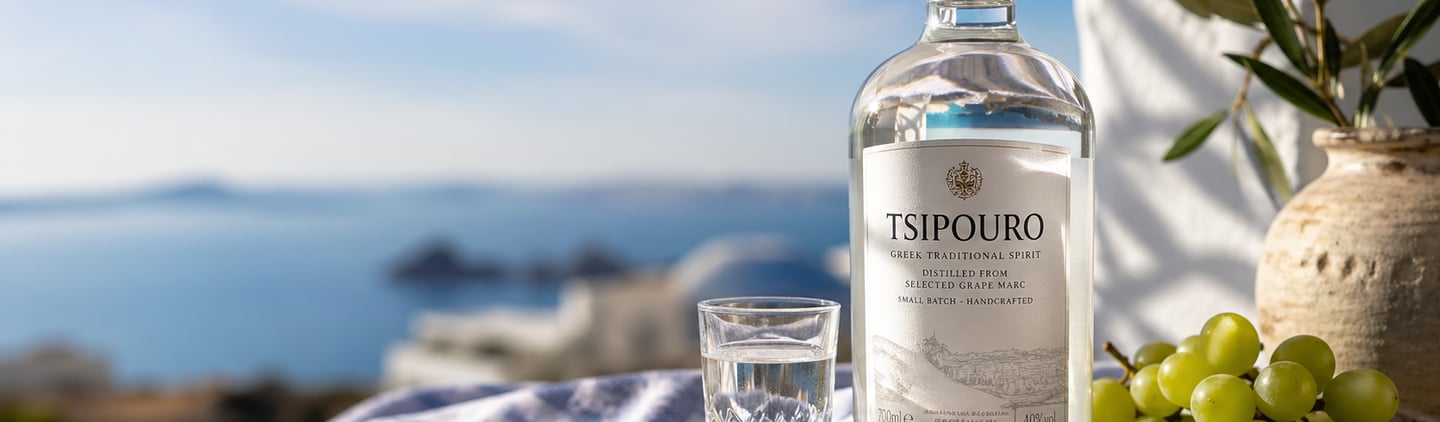
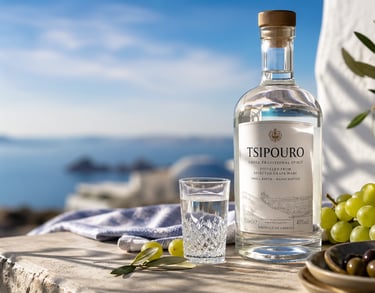
Tsipouro — the aperitif that opens everything
Many tourists see tsipouro on the menu, assume it is something to get drunk on, and skip it.
This is a mistake.
Tsipouro is not for getting drunk. It is the ritual that opens a Greek fish meal — the clear, anise-scented spirit served cold with a small meze, signalling to the kitchen and to yourself that you understand how this meal is supposed to work. It is the exhale before the conversation begins. The permission to stop being in a hurry.
Order it once. You will understand immediately why it exists. And every Greek fish meal after this one will feel incomplete without it.
The 3 things to avoid
✕ Tourist trap 1:Skipping the meze because you want to "save room for the main"
This is not a scam — it is an honest mistake that ruins the meal. Greek fish lunches are not structured like European dinners. The meze — octopus, olives, bread, a glass of tsipouro — is not the starter you eat quickly before the real food arrives. It is half the experience. The rhythm is: meze arrives, you eat slowly, you talk, you order more, the fish comes eventually, you are not in a hurry. Tourists who skip the meze to be efficient get the fish without the architecture around it. They eat a meal. They miss an experience. Order the meze. Let it take forty minutes. The fish will still be there.
✕ Tourist trap 2:Ordering dessert from a restaurant instead of walking to a patisserie
Greek restaurant desserts are almost universally an afterthought — a slice of watermelon, a commercial baklava, a mediocre tiramisu that has nothing to do with Greece. The dessert worth having in Loutraki is not on any restaurant menu. It is at one of the traditional patisseries (zacharoplasteio) on or near the promenade — loukoumades made fresh, dredoures if they have them, spoon sweets served the proper way with cold water. Finish your meal, walk five minutes, and end it properly.
✕ Tourist trap 3:Eating lunch at 12:30 because that's when you're hungry
Greeks eat lunch between 2 and 3pm. The kitchens in good tavernas are at their best then — the charcoal has been going for hours, the oil is at temperature, the cook is in full rhythm. Tourists who arrive at noon find a kitchen that has barely started, food that is technically ready but not at its peak, and a restaurant that is half-empty for a reason. Come at 2pm. The food will be better, the atmosphere will be better, and you will be eating alongside the Greeks who know where the good lunch is.
© 2026 Maggie · Loutraki, Greece · maggieloutraki@gmail.com
Travel Peloponnese